Hopscotch is a kids game for practicing balance and agility. It seems rather silly to someone who has pretty good balance and can hop on one foot, but children are still learning how to coordinate their limbs, so games are a handy way to get some necessary practice. And they don’t know they are practicing anything – it’s just a game!
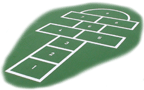
As an adult, if you’ve managed to hold onto any spark of your childish fun and wonder, you will probably still enjoy playing this game. Don’t remember? Go find some chalk (preferably colorful) and draw a hopscotch on your front walkway! You’ll feel rather silly and awkward at first, but once you get the hang of it, your learned inhibitions will slide off and you will be having unadulterated (ha! pun!) fun!
I took this information from this website
“Game origin:
Hopscotch began in ancient Britain during the early Roman Empire. The original hopscotch courts were over 100 feet long! Can you imagine that? They were used for military training exercises.
“Hey, Claudius! how bout a game of Hopscotch?” “Okay Brutus, but first I have to put my gear on! Hang a minute and wait for me?”
Roman foot soldiers ran the course in full armor and field packs, and it was thought that Hopscotch would improve their foot work. Roman children imitated the soldiers by drawing their own boards, and creating a scoring system, and “Hopscotch” spread through Europe. In France the game is called “Marelles”, in Germany, “Templehupfen” (try saying that three times fast!) “Hinklebaan” in the Netherlands (probably played with Heineken beer cans) “Ekaria Dukaria” (played while watching Daria) in India, “Pico” in Vietnam, and “Rayuela in Argentina.”
In order to begin the game, each player must start with a marker. Common stones were used in the days of the Roman Empire, but in more modern times, items such as bean bags, pennies, and other assorted items were used.
Hopscotch boards were usually found in playgrounds, but if there weren’t any, a good piece of chalk could easily remedy that.”
How cool is that?!
If you would like to know more about hopscotch and it’s very interesting and worldwide history (it didn’t start as a ‘girls game’  ) check out this Wikipedia article.


 “) and tapped a couplea screw holes in there so now it’ll be mounted with screws instead of solid.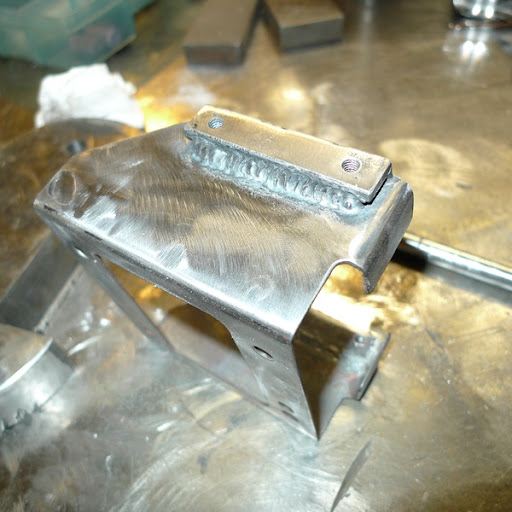
 no destination